.svg)
A felony arrest changes the shape of your week immediately: a bond hearing on the calendar, a court date you don’t understand, and a lot of people telling you different things about what happens next.
A Louisiana felony lawyer defends clients against charges that carry the possibility of state prison time, from the first bond hearing through trial. Rozas Law Firm has represented clients across Louisiana since 2004, with attorneys who appear regularly in the state’s parish courts.
Louisiana’s felony process runs differently than what you might expect from television or from another state’s rules. Rozas Law Firm has helped more than 11,000 clients across the state, and this page covers what a felony charge means here, what happens in the days after an arrest, and how the firm’s criminal defense team gets involved.
Schedule a virtual consultation with an Attorney
What Is a Felony Charge in Louisiana?
Louisiana defines a felony differently than most states. UUnder Louisiana law, a felony is generally a crime punishable by death or imprisonment at hard labor. The specific statute determines the possible penalties for each offense. Louisiana doesn’t sort felonies into lettered classes like some states do. Instead, each statute in the criminal code sets its own sentencing range, so two felony charges can carry very different exposure even though both are technically felonies.
Felony charges span a wide range of conduct. Rozas Law Firm’s criminal defense team handles:
- Violent felonies, including violent crimes such as armed robbery and aggravated battery, and homicide or murder charges
- Drug felonies, including possession with intent to distribute and trafficking, under drug felony charges
- Felony assault and battery, including aggravated versions of felony assault and battery
- Felony DUI/DWI, which applies after repeat offenses or a crash causing serious injury, under felony DUI/DWI
- Sex crime felonies, addressed through sex crime charges
- Federal felonies, prosecuted in federal court and handled through federal felony charges
- White collar and theft felonies, including fraud, burglary, and embezzlement-type charges
- Repeat offender cases, where a new felony charge intersects with Louisiana’s habitual offender law and can raise the sentencing range beyond a first-time offense
A lower-level misdemeanor charge is still serious, but it carries a different maximum exposure than a felony does.

What to Do After I Am Arrested for a Felony?
If you’ve been arrested in Louisiana on a felony charge, the first 72 hours can be important. Louisiana law provides deadlines for bringing an arrested person before a judge for an initial appearance, with certain time periods calculated according to applicable rules (excluding Saturdays, Sundays, and legal holidays). The court may also determine or review bail at that appearance.
From there, the path splits by charge. Most felonies proceed by a bill of information, filed directly by the district attorney. Charges carrying the possibility of death or life imprisonment go through a grand jury indictment instead, and prosecutors have up to 120 days to secure it. If you remain in custody after a felony arrest, Louisiana law generally requires an indictment or bill of information to be filed within 60 days of the arrest. Different deadlines apply when a defendant is released from custody, so the specific circumstances of the case matter.
A few practical points worth knowing early on:
- You have the right to remain silent, and it applies immediately, even during casual-seeming conversations with officers or investigators.
- Bond amounts vary by charge, criminal history, and flight risk, and a judge sets that figure at the 72-hour hearing.
- Where the case is heard depends on where the arrest happened. Cases arising in East Baton Rouge Parish go through the 19th Judicial District Court, Lafayette Parish cases go through the 15th Judicial District Court, and Calcasieu Parish cases (including Lake Charles) go through the 14th Judicial District Court.
Do I Need a Lawyer After I Am Arrested for a Felony in Louisiana?
Early review can provide more time to evaluate the allegations, evidence, and potential legal options. No attorney can guarantee how a felony case will end, and any firm that tells you otherwise isn’t being straight with you. What a lawyer can do is make sure the case is handled correctly from the start: rights protected during questioning, bond arguments made with the right facts in front of the judge, and the district attorney’s deadlines and evidence actually reviewed rather than taken at face value.
Felony consequences reach beyond the courtroom. A conviction can mean state prison time, fines running into the thousands of dollars, and a permanent record affecting housing, employment, professional licensing, and in some cases the right to vote or own a firearm. Louisiana’s habitual offender law also means a prior felony on your record can increase sentencing exposure on a new charge. A felony defense attorney’s job is to give the case the same scrutiny the prosecution is giving it, so you’re not the only one asking questions about how it was built.

Our Results

Nationwide Immigration Services

Why Choose Rozas Law Firm to Help with Your Louisiana Felony Arrest
Rozas Law Firm has represented clients in criminal cases across Louisiana since 2004, with over 20 years of combined experience and more than 11,000 clients served. Founder David Joseph Rozas and Supervising Criminal Law Attorney Shea R. Smith lead a team that includes an in-house investigator and full-time paralegal staff, so felony cases get resources dedicated to building a defense, not just filing paperwork.
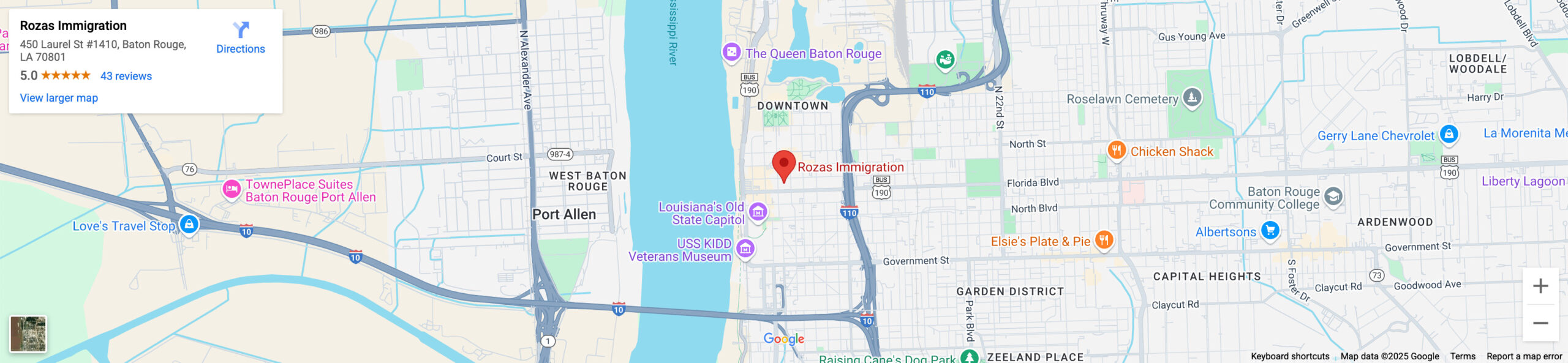
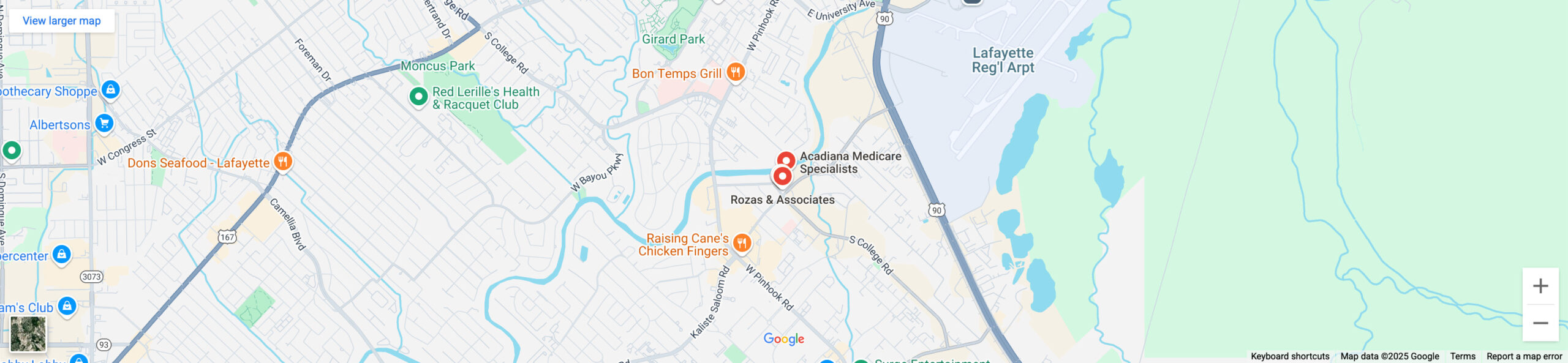
The firm maintains offices across the state, including the Baton Rouge office, the Lafayette office, and the Lake Charles office, with attorneys who appear regularly in the parish courts serving those communities. Representation is available in English and Español, reflecting the communities the firm serves.
Facing a Felony Charge in Louisiana? Talk to Rozas Law Firm
Rozas Law Firm has defended felony cases across Louisiana since 2004, with attorneys serving clients from Baton Rouge to Lafayette to Lake Charles and beyond. The sooner your case gets a real review, the more options tend to be on the table. Schedule a consultation with the firm’s criminal defense team to talk through your charge and what comes next.
This page provides general information about Louisiana felony charges and criminal defense representation. It is not legal advice, and visiting this page does not create an attorney-client relationship with Rozas Law Firm. Past results do not guarantee or predict a similar outcome in any future case. Every case is different, and no attorney can promise a specific result.
Frequently Asked Questions
Related Blog Posts