.svg)
A Notice to Appear or a call that ICE picked up someone you love can upend a family overnight. You need a plan fast, and you need a lawyer who knows how removal cases move through New York’s immigration courts.
A New York deportation defense lawyer represents people facing removal proceedings, ICE detention, or a prior deportation order. Rozas Law Firm’s New York City office handles federal immigration matters for clients across the five boroughs, filing for relief, arguing bonds, and fighting removal orders in immigration court.
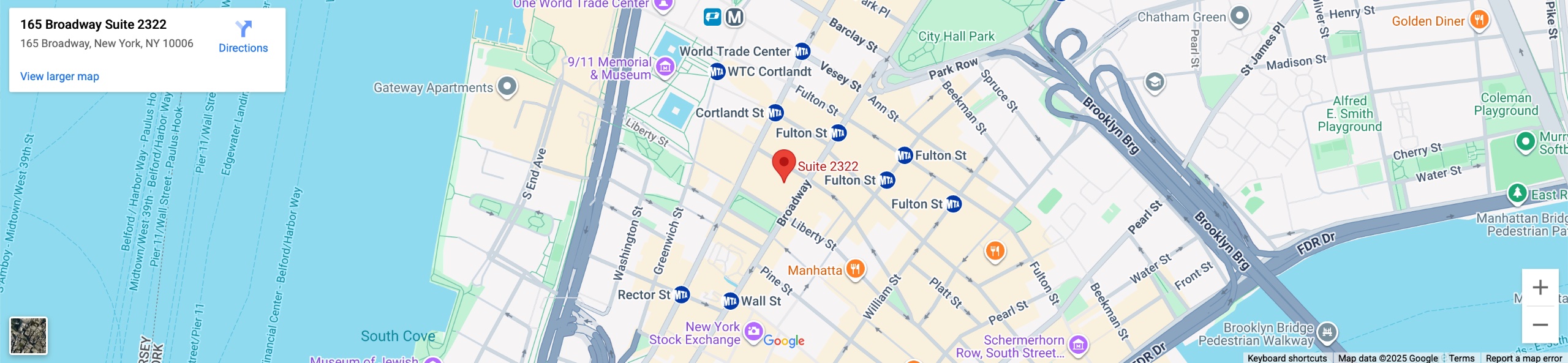
Our Lower Manhattan office is steps from major transit lines, with bilingual staff ready to explain each step in English or Spanish. Below is what an immigration deportation defense lawyer in New York City actually does, what relief may apply, and where cases from this area typically get heard.
Schedule a virtual consultation with an Attorney
What Does New York City Deportation Defense Involve?
New York City deportation defense means building and arguing the legal case that keeps a client in the country, whether that means filing for relief, negotiating with ICE counsel, or appealing a removal order. That work spans the entire case, from the first filing through the final hearing.
This typically includes:
- Reviewing the Notice to Appear (NTA) and identifying every possible defense
- Filing for relief such as asylum, cancellation of removal, or adjustment of status
- Representing clients at bond and merits hearings before an immigration judge
- Negotiating with ICE counsel on prosecutorial discretion
- Filing motions to reopen or appeals to the Board of Immigration Appeals
When Should You Call a Removal Defense Lawyer in New York?
Call a removal defense lawyer in New York as soon as you receive a Notice to Appear, learn that ICE has detained you or a family member, or discover a prior removal order on your record. Immigration court deadlines move quickly, and missing one can close off relief that was otherwise available.
Reach out immediately if:
- You received a Notice to Appear (NTA)
- ICE detained you or a loved one nearby
- You missed a prior immigration court hearing
- You already have a removal order on file
- An immigration judge denied your bond request
- A criminal charge is now affecting your immigration status
Where Does ICE Detain Immigrants Arrested in New York City?
New York City has two active immigration court locations, but people held by ICE are usually transferred outside the city and their hearings move with them. Knowing where a case has landed changes how quickly an attorney can request a bond hearing or file for relief.
Non-detained immigration cases are generally heard at 26 Federal Plaza, while certain dockets are heard at the Varick Street Immigration Court at 201 Varick Street. For detained cases, the nearest ICE facility is the Orange County Correctional Facility in Goshen, NY, about 60 miles, roughly an hour and 10 minutes, north of Manhattan. ICE enforcement and check-in matters for the five boroughs and surrounding counties route through the New York City Field Office of Enforcement and Removal Operations, based at 26 Federal Plaza. Detained clients can also be transferred to facilities farther away, including out of state, which is one reason early legal intervention matters.
If ICE has detained you or a family member, our New York City detention center attorneys page covers what happens next.

Common Reasons People Face Deportation Proceedings in New York City
Removal proceedings can begin for many different reasons, and not every case involves a serious crime. Many immigrants in New York City find themselves in immigration court because of changes to their immigration status, visa issues, or prior immigration history. Understanding why removal proceedings begin is the first step toward building an effective legal defense.
Some of the most common reasons people face deportation proceedings include:
- Visa overstays. Remaining in the United States after your authorized stay expires can lead to removal proceedings.
- Criminal convictions. Certain criminal offenses—including some misdemeanors and many felonies—may trigger deportation under federal immigration law.
- Entering the United States without inspection. Individuals who entered the country without authorization may be placed into removal proceedings if encountered by immigration authorities.
- Violating the terms of a visa. Working without authorization, failing to maintain student status, or violating other visa conditions can affect your ability to remain in the United States.
- Prior removal orders or missed immigration court hearings. Missing a scheduled hearing before the New York Immigration Court or failing to comply with a previous removal order can significantly limit your legal options.
- Immigration fraud or misrepresentation. Providing false information or submitting fraudulent documents during an immigration application can result in removal proceedings.
Being placed in removal proceedings does not automatically mean you will be deported. Depending on your circumstances, you may qualify for relief such as asylum, adjustment of status, cancellation of removal, or other forms of immigration relief. An experienced New York City deportation defense lawyer can evaluate your case and explain the options available to you.
How Does a Removal Case Move Through Immigration Court?
A removal case typically moves through four stages: the Notice to Appear, a bond hearing, the merits hearing before an immigration judge, and any post-hearing appeals. Each stage carries its own deadlines, and skipping a hearing at any stage can result in an automatic removal order.
- Notice to Appear (NTA). ICE files the NTA, listing the grounds for removal and the first court date.
- Bond hearing. If detained, an immigration judge decides whether the person can be released on bond.
- Merits hearing. The judge hears the case, reviews evidence, and rules on whether the person can remain.
- Appeals and post-hearing motions. A denied case can be appealed to the Board of Immigration Appeals or reopened with new evidence.
At a bond hearing, the immigration judge evaluates factors such as community ties, criminal history, and whether the individual poses a flight risk or danger to the community. Not everyone is eligible for bond, making early legal representation especially important.

Our Results

Nationwide Immigration Services

What Happens When ICE Detains a Loved One in New York?
When ICE detains a family member in New York City, a deportation lawyer can request a bond hearing, challenge the legality of the detention, and start building the removal defense while the person is still in custody.
Families often don’t know which facility their loved one was sent to, whether they can visit, or whether the detention is legal. If ICE is holding someone without legal grounds, a habeas corpus petition filed in federal court can challenge the detention and, in some cases, result in release or a mandated bond hearing.
A deportation lawyer for a loved one in New York typically starts by confirming the facility, requesting bond, and reviewing immigration history for possible relief. Acting quickly matters, since detained clients can be moved between facilities, including out of state, while a case is pending.
Preparing for Your Deportation Defense Consultation in New York City
The more information you can provide during your initial consultation, the better your attorney can evaluate your case and determine the most appropriate defense strategy. Even if you don’t have every document, bringing as much information as possible can help move your case forward more efficiently.
If available, bring:
- Your Notice to Appear (NTA) or any documents from the New York Immigration Court.
- Any ICE paperwork, detention records, or documents related to your arrest or custody.
- Your passport, visa, employment authorization card, or other immigration documents.
- Copies of previous immigration applications, USCIS notices, or immigration court decisions.
- Court records or charging documents if you have any criminal history.
- Marriage certificates, birth certificates, or other documents supporting family-based immigration benefits.
- A list of your previous addresses, employers, and dates of entry into the United States.
- The names and contact information of close family members who may be able to support your case.
Don’t worry if you don’t have every document. Many individuals in removal proceedings—especially those being held in ICE detention—have limited access to their records. Our legal team can help obtain the necessary documentation, explain the immigration court process, and begin building your defense as quickly as possible.


Why New York City Families Choose Rozas Law Firm
Rozas Law Firm has represented immigrants and families since 2004, with a Lower Manhattan office built for clients across the five boroughs. A few things families tell us matter most when choosing a deportation lawyer near Manhattan:
- 20+ years handling immigration, criminal defense, and family law cases
- 11,000+ clients helped, with more than 2,000 positive client reviews
- 22+ bilingual staff members, with full English and Spanish-speaking representation available
- An office steps from major transit lines, accessible from across the five boroughs
- Virtual consultations available for clients who can’t travel to Lower Manhattan
David Rozas is licensed to practice law in Louisiana, not New York. His New York practice is limited to federal immigration law matters. Our New York City immigration attorneys also handle asylum, citizenship, and marriage and family visa cases for clients throughout the region.
Talk to a New York Deportation and Removal Defense Attorney Today
A removal case moves fast. The earlier an attorney reviews your record, the more options remain. Rozas Law Firm has served immigrant families since 2004, with bilingual staff in English and Spanish. David Rozas is licensed in Louisiana; his New York practice is limited to federal immigration matters.
Visit our Rozas Law Firm in New York City page to schedule a consultation, or reach out through our contact form to speak with a New York City deportation defense lawyer about your case.
Frequently Asked Questions
Related Blog Posts