.svg)
How to Bring Your Fiancé’s Children to the U.S.
You’ve found the person you want to marry. But if your fiancé has children, you’re probably wondering how to bring the whole family to America together. The good news is that U.S. immigration law provides a path for this.
A K2 visa attorney helps families navigate the process of bringing a fiancé’s unmarried children (under 21) to the U.S. alongside the K1 fiancé visa. Children are included on the same petition, can attend school, and may apply for green cards after the parents marry.
With proper planning, your future stepchildren can join you in building a new life in America. Our immigration attorneys at Rozas Law Firm have helped thousands of families reunite, guiding them through every step of the K1 and K2 visa process across Louisiana and beyond.
In this guide, we explain who qualifies for a K2 visa, walk you through the application process, and show you how our team can help keep your family together.
Schedule a virtual consultation with an Attorney
What Is the K2 Visa?
The K2 visa allows the children of K1 fiancé visa holders to enter the United States with their parent. It is a derivative visa, meaning it depends entirely on the parent’s K1 visa approval. Without the K1, there is no K2.
This visa exists because U.S. immigration law recognizes that families should stay together. When a U.S. citizen petitions to bring their foreign fiancé to America through a K1 fiancé visa, they can include the fiancé’s children on the same application. The children do not need separate petitions
Here’s how the K1 and K2 visas connect:
| Visa Type | Who It’s For | Purpose |
| K1 Visa | Foreign fiancé of U.S. citizen | Enter U.S. to marry within 90 days |
| K2 Visa | Unmarried children (under 21) of K1 holder | To accompany parents to the U.S. |
The K2 visa is temporary. It gives children legal status while the family completes the marriage and applies for permanent residency. After the wedding takes place, K2 holders can file for a green card just like their parent.
Children on K2 visas can live with their family, attend school, and apply for work permits. They are not left in limbo. The visa provides a real pathway to building a life in America alongside their parent and new stepparent.
One important note: K2 children can travel to the U.S. at the same time as their K1 parent or follow within one year of the parent’s visa issuance. However, they cannot arrive before the K1 parent enters the country.
Who Qualifies for a K2 Visa?
Not every child qualifies for a K2 visa. U.S. immigration law sets clear eligibility requirements that must be met at the time the child enters the United States.
To qualify for a K2 visa, the child must be:
- Unmarried at the time of U.S. entry
- Under 21 years old at the time of U.S. entry
- The biological or legally adopted child of the K1 visa holder
These requirements are strict. There is no flexibility. A child who turns 21 before entering the country loses K2 eligibility, even if the petition was filed when they were younger. A child who gets married at any point before entry also loses eligibility.
The K2 visa does not require the child to be biologically related to the U.S. citizen sponsor. The child only needs to be the son or daughter of the foreign fiancé. After the marriage takes place, the U.S. citizen becomes the child’s stepparent, which establishes the legal relationship needed for green card sponsorship.
Here’s a quick eligibility checklist:
| Requirement | Details |
| Age | Must be under 21 when entering the U.S. |
| Marital Status | Must be unmarried |
| Relationship | Must be biological or adopted child of K1 holder |
| Parent’s Visa | K1 visa must be approved first |
| Entry Timing | Must enter with or after K1 parent (not before) |
What about adopted children? Yes, legally adopted children qualify. However, the adoption must be finalized and legally recognized. Immigration officials may request additional documentation to verify the parent-child relationship.
What about children from different fathers or mothers? This can add complexity. If a child has another legal parent abroad, you may need that parent’s consent to take the child out of the country. Custody laws vary by nation, so families should review their home country’s requirements before applying.
Our K2 visa attorneys at Rozas help families understand these eligibility rules and gather the right documentation from the start.

How to Apply for a K2 Visa
The K2 visa application process runs alongside the K1 fiancé visa process. You do not file a separate petition for children. Instead, the U.S. citizen sponsor includes all eligible children on the same Form I-129F used for the fiancé.
Here’s how the process works step by step:
Step 1: U.S. Citizen Files Form I-129F
The U.S. citizen sponsor files Form I-129F (Petition for Alien Fiancé) with USCIS. This single form covers both the K1 fiancé and any K2 children. The sponsor must list each child’s full name, date of birth, and country of birth on the petition.
Step 2: USCIS Reviews and Approves the Petition
USCIS reviews the petition to confirm the relationship is genuine and all parties meet eligibility requirements. This stage currently takes approximately 6 to 11 months. If USCIS needs more information, they will send a Request for Evidence (RFE).
Step 3: Case Transfers to National Visa Center
Once approved, USCIS forwards the petition to the National Visa Center (NVC). The NVC assigns a case number and sends the file to the U.S. embassy or consulate in the fiancé’s home country. This transfer typically takes 3 to 4 weeks.
Step 4: Each Applicant Completes Form DS-160
The K1 fiancé and each K2 child must complete their own Form DS-160 (Online Nonimmigrant Visa Application). This is the official visa application submitted to the U.S. Department of State. Each applicant pays the $265 visa application fee.
Step 5: Medical Examinations
All applicants must undergo a medical exam performed by a U.S.-approved physician in their home country. The exam includes a physical evaluation, blood tests, and required vaccinations. Medical exam costs vary by country but typically run $200 to $300 per person.
Step 6: Visa Interview at U.S. Embassy
The K1 fiancé and K2 children attend a visa interview at the U.S. embassy or consulate. Children and parents can often interview together, though embassy procedures vary by location. The consular officer will ask questions about the relationship and review all submitted documents.
Step 7: Visa Issuance and Travel
If approved, each applicant receives a visa stamp in their passport. The K2 visa is valid for a single entry within 6 months of issuance. Children must enter the U.S. at the same time as or after their K1 parent. They cannot arrive first.
| Stage | What Happens | Estimated Time |
| I-129F Filing | U.S. citizen submits petition | Day 1 |
| USCIS Processing | Review and approval | 6–11 months |
| NVC Transfer | Case sent to embassy | 3–4 weeks |
| DS-160 & Documents | Applicants prepare | 2–4 weeks |
| Interview | Embassy appointment | 1–4 weeks after scheduling |
| Travel | Enter the U.S. | Within 6 months of visa issuance |
Total estimated timeline: 6 to 19 months from filing to arrival.
Documents Required for K2 Visa Applications
Gathering the right documents is one of the most important parts of the K2 visa process. Missing or incorrect paperwork causes delays and can even lead to denial. Each K2 child needs their own set of documents separate from the K1 parent.
Documents the K2 Child Must Provide:
- Valid passport with at least six months validity beyond the intended U.S. entry date
- Birth certificate showing the relationship to the K1 visa holder (must be certified copy)
- Two passport-style photos meeting U.S. visa photo requirements
- Form DS-160 confirmation page printed after completing the online application
- Medical examination results in a sealed envelope from a U.S.-approved doctor
- Police certificates from any country where the child has lived for six months or more (required for children age 16 and older)
Documents the U.S. Citizen Sponsor Must Provide:
- Form I-134 (Affidavit of Support) showing financial ability to support the K2 children
- Proof of U.S. citizenship (passport, birth certificate, or naturalization certificate)
- Evidence of income such as tax returns, pay stubs, or employment letters
- Proof of relationship between sponsor and K1 fiancé (photos, messages, travel records)
If documents are not in English, you must provide certified translations. The translator must include a signed statement certifying the translation is accurate and complete.
| Document | Who Provides It | Notes |
| Passport | K2 child | Must be valid 6+ months |
| Birth certificate | K2 child | Certified copy required |
| DS-160 confirmation | K2 child | One per applicant |
| Medical exam | K2 child | Sealed envelope from approved doctor |
| Police certificate | K2 child (16+) | From each country lived 6+ months |
| I-134 Affidavit | U.S. sponsor | Proves financial support |
| Income evidence | U.S. sponsor | Tax returns, pay stubs |
Common Document Challenges:
Some families struggle to obtain certain records. Birth certificates may be lost, incomplete, or from countries with unreliable record-keeping. In these situations, secondary evidence such as baptismal records, school records, or affidavits from family members may be accepted.
Custody documentation can also create complications. If the K2 child has another legal parent who is not traveling to the U.S., you may need written consent or a custody order authorizing the child to leave the country. Requirements vary by nation, so check your home country’s laws carefully.
Our attorneys at Rozas review every document before submission to ensure nothing is missing or incorrectly formatted. One small error can delay your case by months. We help families avoid these preventable setbacks.
K2 Visa Processing Time and Costs
Understanding the timeline and costs helps families plan ahead. The K2 visa process involves multiple stages, and each one has its own timeframe and fees. Knowing what to expect removes surprises and reduces stress.
How Long Does the K2 Visa Take?
The K2 visa timeline mirrors the K1 visa timeline because both are processed together. From the day the U.S. citizen files Form I-129F to the day the family enters the United States, the process typically takes 6 to 19 months.
Here’s a breakdown of each stage:
| Stage | Estimated Timeframe |
| USCIS processing of I-129F | 6–11 months |
| National Visa Center transfer | 3–4 weeks |
| Embassy scheduling and interview | 1–2 months |
| Visa issuance after approval | 1–2 weeks |
| Travel to U.S. (must occur within validity) | Up to 6 months |
Processing times vary based on USCIS workload, the specific U.S. embassy handling your case, and whether any additional documentation is requested. Some countries have longer embassy wait times than others.
The K2 visa is not eligible for premium processing. There is no way to pay extra to speed up the timeline. However, working with an experienced K2 visa attorney can help avoid delays caused by errors, incomplete forms, or missing documents.
How Much Does the K2 Visa Cost?
The K2 visa has no separate USCIS filing fee. Children are included on the parent’s I-129F petition at no additional charge for that stage. However, each K2 child does incur individual fees during the embassy and medical examination phases.
Cost breakdown per K2 child:
| Fee Type | Amount | Notes |
| I-129F filing fee | $0 for K2 | Covered under parent’s petition ($535 total) |
| DS-160 visa application | $265 | Per K2 applicant |
| Medical examination | $200–$350 | Varies by country and clinic |
| Biometrics (if required) | $85 | May apply in some cases |
| Visa issuance fee | Varies | Depends on reciprocity with home country |
Example: Family with two K2 children
- I-129F filing: $535 (covers K1 and both K2 children)
- DS-160 fees: $265 x 3 applicants = $795
- Medical exams: $250 x 3 applicants = $750 (estimated)
- Total estimated cost: $2,080 (not including travel, translations, or attorney fees)
Additional costs may include document translations, obtaining certified copies of birth certificates, travel expenses for embassy interviews, and flights to the United States after approval.
Budgeting tip: Start gathering documents and funds early. Some families are caught off guard by the per-person fees that add up quickly with multiple children.

Our Results

Nationwide Immigration Services
What Happens If Your Child Turns 21? (Aging Out)
This is one of the most stressful issues families face. If a K2 child turns 21 before entering the United States, they lose eligibility for the K2 visa. This is called “aging out,” and it can separate families who expected to travel together.
The Child Status Protection Act (CSPA) does not apply to K2 visas. This is critical to understand. CSPA protects children in many other immigration categories from aging out due to processing delays. But K2 children receive no such protection.
The rule is simple and strict: The child must be under 21 years old on the day they physically enter the United States on a K2 visa. Not the day the petition was filed. Not the day the visa was approved. The day they cross the U.S. border.
What happens if a child ages out?
If a child turns 21 before entering the U.S., they cannot use the K2 visa. At that point, the family has limited options:
| Scenario | Possible Path Forward |
| Child turns 21 before visa interview | No longer eligible for K2; must pursue separate immigrant visa |
| Child turns 21 after interview but before travel | Must enter U.S. before birthday or lose eligibility |
| Child turns 21 after entering U.S. on K2 | Still eligible for adjustment of status (per Matter of Le, 2011) |
The good news: If your child entered the U.S. before turning 21, they can still file for adjustment of status after their 21st birthday. The Board of Immigration Appeals confirmed this in Matter of Le (2011). What matters is the age at entry, not the age when the green card application is processed.
How to protect your child from aging out:
- File as early as possible. Do not wait. Every month of delay increases the risk for children approaching 21.
- Notify the embassy. If your child will turn 21 within 90 days of the scheduled interview, alert the embassy immediately. They may be able to expedite processing.
- Plan travel strategically. Once the visa is approved, book travel promptly. Do not wait until the last minute.
- Work with an attorney. A K2 visa attorney can monitor your case timeline and flag potential aging-out risks before they become emergencies.
Families with teenagers should treat this as urgent. A 19-year-old child when you file could easily turn 21 before the process completes if there are any delays. We have seen families separated because they did not anticipate how long the process would take.
At Rozas Law Firm, we track every case closely and alert families when timing becomes a concern. We do everything possible to keep your family together.
After Arrival: From K2 Visa to Green Card
Arriving in the United States is a major milestone. But it is not the finish line. The K2 visa is temporary, and children must take additional steps to become permanent residents. Understanding what happens after arrival helps families stay on track.
The 90-Day Marriage Requirement
Once the K1 fiancé enters the United States, the couple must marry within 90 days. This is not optional. If the marriage does not happen within this window, both the K1 and K2 visas expire. The family would then be required to leave the country.
The K2 child’s status depends entirely on the parent’s K1 status. If the parent fails to marry in time, the child’s legal status is also at risk. Planning the wedding before arrival helps avoid last-minute stress.
Filing for Adjustment of Status
After the wedding, K1 and K2 visa holders can apply for lawful permanent residence (a green card) by filing Form I-485 (Application to Register Permanent Residence or Adjust Status).
K2 children should file their I-485 at the same time as or after their parent. They cannot file before the K1 parent submits their application.
| Form | Purpose | Filing Fee (2025) |
| I-485 | Adjustment of status to permanent resident | $1,440 (adults) / $950 (children under 14) |
| I-864 | Affidavit of Support from U.S. citizen sponsor | Included with I-485 |
| I-765 | Work permit (optional) | Included with I-485 |
| I-131 | Travel permit (optional) | Included with I-485 |
The adjustment of status process typically takes 7 to 12 months. During this time, K2 children remain in legal status as long as their application is pending.
What Can K2 Children Do While Waiting?
K2 visa holders are not stuck in limbo while their green card application processes. They have real opportunities to begin building their lives in America.
- Attend school. K2 children can enroll in public or private schools at any level, from elementary through college.
- Apply for work authorization. By filing Form I-765 alongside the I-485, children can request an Employment Authorization Document (EAD) allowing them to work legally.
- Apply for travel authorization. Form I-131 provides Advance Parole, which allows K2 holders to travel outside the U.S. and return while their adjustment is pending.
Important travel warning: K2 visa holders should not travel outside the United States after arrival unless they have Advance Parole approval. Leaving without this document can result in abandonment of the adjustment application and denial of reentry.
What Happens After Green Card Approval?
Once approved, K2 children receive conditional or permanent resident status depending on how long the parents have been married at the time of approval.
| Marriage Length at Approval | Green Card Type |
| Less than 2 years | Conditional (2-year) green card |
| 2 years or more | Permanent (10-year) green card |
Conditional residents must file Form I-751 to remove conditions before their 2-year card expires. After that, they hold the same permanent resident status as any other green card holder.
From green card to citizenship: After holding permanent resident status for 5 years (or 3 years if married to a U.S. citizen), individuals may apply for U.S. citizenship through naturalization. Learn more about your options on our marriage and family visas page.


Why Choose Rozas Law Firm as Your K2 Visa Attorney?
The K2 visa process involves tight deadlines, detailed paperwork, and zero room for error. One mistake can delay your case by months or even separate your family. Working with an experienced immigration attorney makes a real difference.
Here’s what sets Rozas apart:
We Handle K1 and K2 Cases Together
At Rozas, we treat the K1 and K2 visas as one unified family case. We do not view children as an afterthought. From the initial I-129F petition through green card approval, we manage every detail for every family member.
We Understand the Stakes
Bringing your fiancé’s children to America is not just paperwork. It is about keeping a family together. We recognize the emotional weight of these cases and treat every client with the care and attention they deserve.
We Serve Families Across the Entire United States
We also represent clients nationwide and handle cases involving U.S. embassies around the world.
We Speak Your Language
Our team provides services in both English and Spanish. We want every family to feel comfortable and understood throughout the process.
We Track Timing to Prevent Aging Out
For families with older children, timing is everything. We monitor every case for aging-out risks and take proactive steps to keep your timeline on track. If we see a potential problem, we alert you immediately.
Our Track Record Speaks for Itself
Rozas has helped more than 10,000 clients with immigration matters. Our attorneys have guided countless families through the K1 and K2 visa process, from initial filing to green card approval. We know what works and what to avoid.
| What We Offer | How It Helps Your Family |
| Complete case management | One team handles everything from start to finish |
| Document review | We catch errors before they cause delays |
| Interview preparation | We prepare you and your children for embassy appointments |
| Timeline monitoring | We flag aging-out risks and expedite when possible |
| Bilingual support | English and Spanish services available |
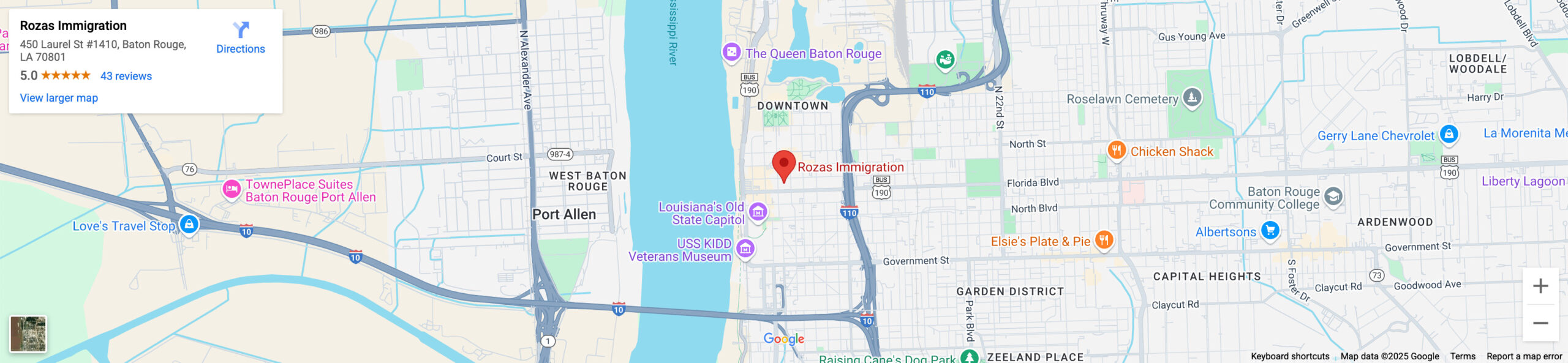
| Statewide access | Offices across Louisiana for in-person consultations |
Starting a new life with your fiancé should not mean leaving their children behind. The K2 visa exists so families can stay together, and with the right guidance, the process is manageable.
At Rozas, we help U.S. citizens bring their fiancé’s children to America every day. We handle the paperwork, prepare families for interviews, and monitor timelines to avoid costly mistakes. You focus on planning your wedding and your future. We handle the immigration details.
Here’s what to do next:
- Call our team at (225) 341-6945. We answer calls in English and Spanish.
- Schedule a consultation. Meet with a K2 visa attorney who will review your situation and explain your options.
- Get a clear plan. We will outline the timeline, costs, and steps needed to bring your entire family to the United States.
Your family’s future starts with a single step. Contact Rozas today and let us help you bring everyone home.
Frequently Asked Questions
Related Blog Posts