.svg)
Your spouse is abroad. You’re here. And every day apart feels longer than the last.
The K-3 visa was created for exactly this situation. It allows the foreign spouse of a U.S. citizen to enter the country while their immigrant visa petition works its way through the system. Instead of waiting it out from separate countries, you can be together while the process moves forward.
At Rozas Law Firm, we help U.S. citizens and their spouses understand all their options, including K-3 and K-4 visas, and build the strongest case possible. We’ve helped more than 10,000 families navigate the U.S. immigration system since 2004, and we’re ready to help yours.
Explore our marriage and family visa services or learn more about our full immigration practice.
Schedule a virtual consultation with an Attorney
What Is a K-3 Visa?
The K-3 is a nonimmigrant visa for the foreign spouse of a U.S. citizen. It grants temporary legal status in the United States while the couple waits for a pending Form I-130 (Petition for Alien Relative) to be approved. Once in the U.S. on a K-3, your spouse can live with you, apply for work authorization, and file for a green card.
The K-3 does not grant permanent residence on its own. It’s a bridge, not a destination. The path to a green card still runs through the I-485 adjustment of status process after your spouse arrives.
What Is a K-4 Visa?
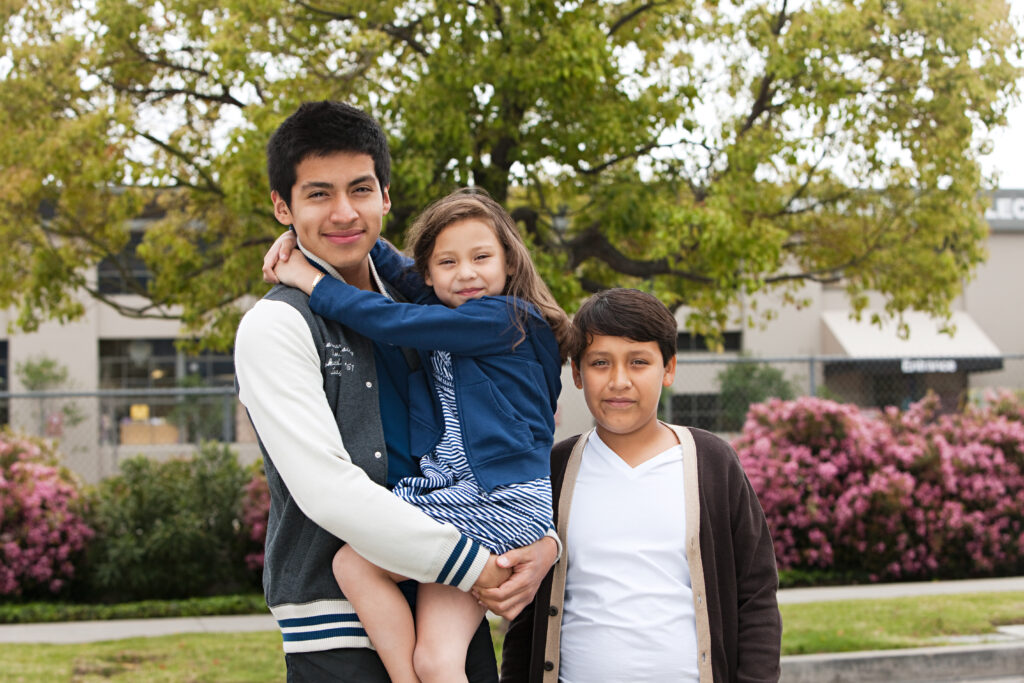
The K-4 visa covers the unmarried children (under 21) of a K-3 visa holder. If your spouse has biological or adopted children who will be traveling with them, the K-4 gets those children into the U.S. legally while the family’s immigration case continues.
A few things to know about K-4 status:
- K-4 holders can stay for two years or until their 21st birthday, whichever comes first
- Their status is tied directly to their K-3 parent’s status
- They can also apply for work authorization through Form I-765
- Once the I-130 is approved, K-4 holders can apply for a green card alongside the K-3 spouse
If your family includes children, a K4 visa lawyer can make sure they’re included correctly on your petition from the very beginning.
Who Qualifies for a K-3 Visa?
To be eligible, a few conditions must all be true at the time of application:
- You are a U.S. citizen (not a green card holder)
- You are legally married to the foreign national applying
- You have already filed Form I-130, and it is still pending with USCIS
- Your spouse currently resides outside the United States
- Both of you intend to live together permanently in the U.S.
Same-sex married couples qualify under the same rules as opposite-sex couples. Common-law relationships may qualify depending on the laws of the country where the marriage took place. An immigration attorney can help you determine if your specific situation meets the standard.

Our Results

Nationwide Immigration Services

Is the K-3 Still the Right Option?
Here’s something we always tell clients upfront: the K-3 visa is rarely used today. That’s not because it doesn’t work. It’s because processing times for the K-3 have stretched to the point where they often match or exceed the time it takes to simply complete the CR-1 or IR-1 immigrant visa process directly.
There’s also a procedural wrinkle. If USCIS approves your I-130 before (or at the same time as) your I-129F, the K-3 case is automatically closed. Your spouse would then need to apply for an immigrant visa instead.
So why does the K-3 still matter? A few situations where it may make sense:
- Your I-130 was recently filed and you want your spouse to enter the U.S. as soon as legally possible
- Your spouse’s home country has longer consular processing timelines for immigrant visas
- Family circumstances make an extended separation especially difficult
The honest answer is that the right path depends on your specific case. That’s why speaking with a K-3 visa lawyer matters. We can compare your options and tell you which route actually gets your family together faster.
How the K-3 Visa Process Works
The process involves both USCIS and the U.S. Department of State. Here’s the general flow:
- File Form I-130 with USCIS to establish your spousal relationship
- File Form I-129F (Petition for Alien Fiancé(e)) for your spouse, even though you’re already married
- USCIS reviews both petitions and sends them to the National Visa Center (NVC)
- The NVC forwards the I-129F to the U.S. Embassy or Consulate in your spouse’s country
- Your spouse attends a medical exam and a visa interview
- If approved, your spouse receives a K-3 visa and enters the U.S.
- After arrival, file Form I-485 to apply for a green card
If your marriage is less than two years old when the green card is approved, your spouse will receive conditional permanent residence. You’ll need to file Form I-751 together before that two-year card expires to remove the conditions and obtain full permanent resident status.

Why Work With a K-3 Visa Lawyer?
Immigration forms are unforgiving. A missing document, an inconsistency in your evidence, or a missed deadline can push your case back by months. A K-3 visa attorney helps you avoid those setbacks.
At Rozas Law Firm, our team provides:
- A clear review of all your spousal visa options, not just K-3
- Careful preparation of your I-130 and I-129F petitions
- Guidance on building strong evidence of a bona fide marriage
- Support through embassy interviews and any requests for additional evidence
- Bilingual service in English and Spanish
- Nationwide representation, including virtual consultations
We show up. For every hearing, every interview, every step that matters for your case.
Frequently Asked Questions
Related Blog Posts