.svg)
Under Federal Investigation in Baton Rouge? Here’s What to Do Now
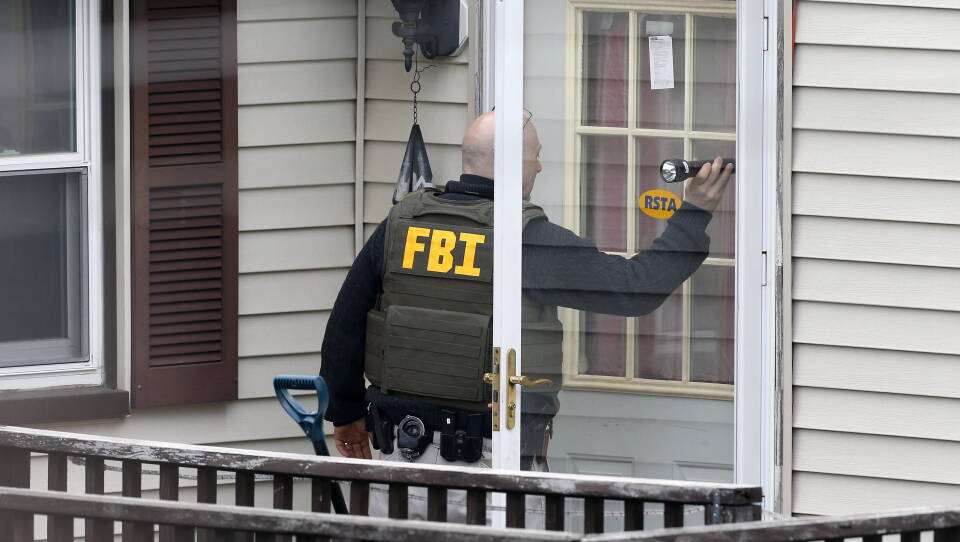
The phone call usually comes on an ordinary day. An FBI agent left a card at your office. A letter arrived from the U.S. Attorney’s Office for the Middle District of Louisiana. A business associate mentions, almost casually, that agents asked him questions about you last week. Your stomach drops, and it should. A federal investigation is not a traffic ticket, and the decisions you make in the first 48 hours matter more than almost anything that happens later.
Our defense team, which includes lawyers with over 35 years of criminal defense experience, has represented people at every stage of the federal process and can be on your case the same day you call. We see the same pattern over and over. The people who get hurt worst are not always the ones who did the worst things. They’re the ones who tried to handle it themselves. They talked to agents. They explained. They cleaned up records. They waited to see what would happen. Don’t be that person.
Witness, Subject, or Target: Know Which One You Are
Federal prosecutors sort people in an investigation into three rough categories, and the difference matters enormously. A witness is someone who has information but isn’t suspected of wrongdoing. A subject is someone whose conduct falls within the scope of the grand jury’s investigation, meaning the government hasn’t decided about you yet. A target is someone the prosecutor believes committed a crime and intends to indict.
Here’s the catch: nobody hands you a scorecard, and your status can change overnight. Plenty of people walked into an interview as a witness and walked out as a subject because of something they said in the room. A federal criminal defense attorney in Baton Rouge can often contact the prosecutor, find out your status, and learn the general scope of the investigation without exposing you to any risk. That single phone call, made by counsel rather than by you, is frequently the most valuable early move in the entire case.
If you receive an actual target letter, treat it as the fire alarm it is. A target letter means the government believes it has substantial evidence linking you to a federal crime. It often invites you to testify before the grand jury or to have your lawyer contact the prosecutor. It is not a bluff, and it is not something to think about for a few weeks. Indictments follow target letters, sometimes quickly.
When FBI, IRS-CI, or HHS-OIG Agents Show Up at Your Door
Federal agents like surprise. They come to your home at 7 a.m. or your office in the middle of the workday, precisely because you’re unprepared and inclined to be cooperative. They are polite, professional, and very good at their jobs. Their job, in that moment, is to get you talking before you’ve spoken to a lawyer.
You have an absolute right to decline the interview. Use it. Say something like: “I’m happy to cooperate through my attorney. Here’s who to call.” Then stop talking. You will feel rude. Do it anyway.
The reason is a statute most people have never heard of: 18 U.S.C. § 1001. Making a false statement to a federal agent is itself a felony punishable by up to five years in prison, even if you’re never charged with the underlying crime being investigated. You don’t have to be under oath. The interview doesn’t have to be recorded. If agents believe you lied about a date, a payment, or a meeting, you can be charged for the lie alone, and people regularly are. An innocent memory lapse can look like deception when it’s written up in an agent’s report. The safest interview is the one you don’t give without counsel in the room, or don’t give at all.
Never, under any circumstances, destroy documents, delete emails, or ask anyone else to stay quiet. Obstruction charges are often easier to prove than the original allegations, and they turn defensible cases into disasters.
Grand Jury Subpoenas and What They Tell Us
Many white collar investigations in Louisiana surface through a grand jury subpoena, either for your testimony or for records: bank statements, billing files, payroll data, emails. A subpoena is not an accusation, but it is a window into what the government is chasing. The categories of documents requested, the time period covered, the entities named, all of it tells an experienced white collar crime lawyer where the investigation is headed.
Responding to a subpoena is technical work. Produce too little and you risk obstruction allegations. Produce carelessly and you may hand over privileged material or volunteer problems the government hadn’t found. There are also Fifth Amendment issues that can apply even to document production in some circumstances. This is not a project for your business attorney who handles contracts, and it is definitely not a do-it-yourself project.
The Charges Federal Prosecutors Bring in White Collar Cases
Investigations out of the Middle District tend to cluster around a familiar set of statutes: wire fraud and mail fraud, healthcare fraud involving Medicare and Medicaid billing, tax fraud built by IRS Criminal Investigation, embezzlement, and money laundering counts layered on top of almost anything involving movement of money. Healthcare cases deserve special mention in Baton Rouge, where HHS-OIG agents actively work provider billing cases. A coding dispute or a documentation problem can be recast as a multi-year fraud scheme, and providers often have no idea they’re under scrutiny until agents appear.
These charges carry serious prison exposure, and federal sentencing is driven heavily by alleged loss amounts, which the government routinely calculates in the most aggressive way possible. Fighting that math is a core part of the defense, but the better fight happens earlier.
Pre-Indictment Defense: The Window That Actually Matters
Here is the hopeful part, and it’s real. Federal investigations move slowly, often over months or years, and that time can work for you if you use it. Before an indictment, a defense lawyer can present evidence the agents never gathered, correct false assumptions, challenge the government’s theory, and negotiate. Sometimes the result is no charges at all. Sometimes it’s a reduced charge, a civil resolution, or an agreement that avoids the worst outcomes. Every case is different, and no honest lawyer promises you a declination. But once the grand jury returns an indictment, the realistic options narrow fast. Prosecutors who have already committed publicly to a case rarely walk it back.
That’s why waiting is the worst strategy available. The government has been working on this for months. You’re behind, but you’re not helpless, and the gap closes the day you get counsel involved.
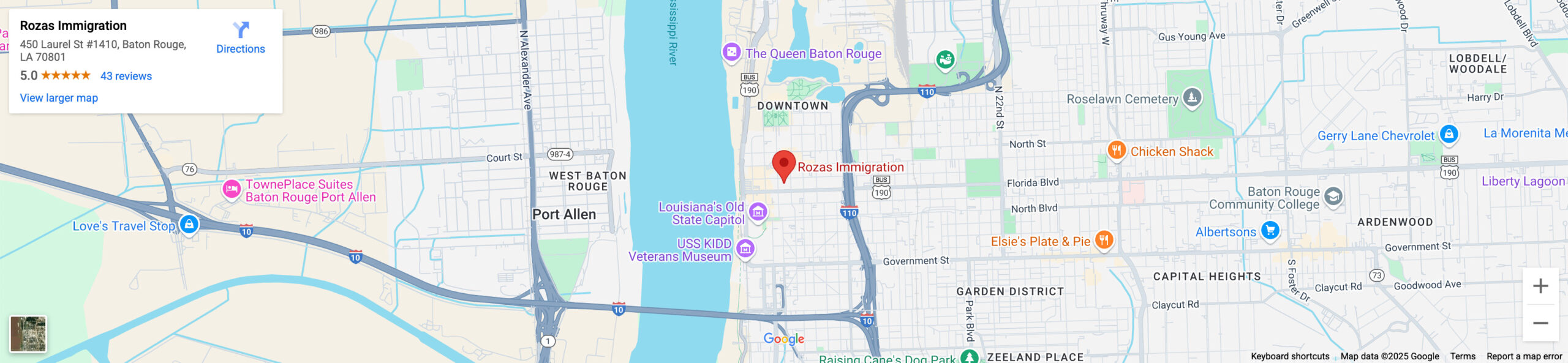
If you’ve received a target letter or grand jury subpoena, or federal agents have contacted you anywhere in East Baton Rouge, Ascension, Livingston, or West Baton Rouge Parish, call Rozas Law Firm in Baton Rouge at (225) 341-6945 for a confidential consultation, available in English and Spanish. We defend clients in the U.S. District Court for the Middle District of Louisiana, and the sooner we start, the more we can do.
This article is for general information only and is not legal advice. Every case is different.