.svg)
Clearing Your Record: How Expungement Works in Louisiana

A criminal record does not just sit in a courthouse file. It shows up when you apply for a job, an apartment, a nursing license, sometimes even a volunteer position at your kid’s school. One arrest from ten years ago keeps costing you, over and over. And here is the part that surprises people: it costs you even if the charge was dropped.
Louisiana law gives many people a way out. It is called expungement, and it is governed by Articles 976 through 984 of the Louisiana Code of Criminal Procedure. Our team of criminal defense attorneys, some with more than 35 years of experience defending people in Louisiana, has filed these petitions for years from our Baton Rouge office, and the most common thing we hear from clients is some version of “I had no idea I could do this.” Plenty of people qualify and never file. Here is who qualifies, what it costs, and what an expungement actually gets you.
What an Expungement Does in Louisiana (and What It Doesn’t)
An expungement seals your record from public view. It does not shred it. Once the court grants your petition, the arrest and any related conviction come off the public record, which means the standard background checks run by most private employers and landlords will not show it. In most situations you can lawfully tell an employer you were not convicted.
The record still exists behind the curtain. Law enforcement can see it. Prosecutors can see it, and they can use a prior conviction against you if you pick up a new charge. Certain licensing boards, including those for nursing, medicine, teaching, and law, keep access as well. So an expungement is not a time machine. It is a sealed door, and for most day-to-day purposes, a sealed door is exactly what you need. Jobs, housing, and professional advancement all get easier when the first page of your background check comes back clean.
One more thing worth saying plainly. If you have questions about restoring gun rights after a felony, an expungement alone does not settle that. State and federal firearms law overlap in ways that deserve their own conversation with a lawyer before you touch a firearm.
Arrests Without a Conviction Can Usually Come Off Right Away
This is the category people sleep on. If you were arrested and the district attorney refused the charge, if the case was dismissed, or if you went to trial and were acquitted, you can generally file for an expungement immediately. No waiting period. The arrest is still sitting in the Louisiana State Police database and still showing up on background checks until you do something about it.
Think about how often this happens in East Baton Rouge Parish. People get arrested after a fight that was really self-defense, or picked up on a warrant that turned out to be somebody else’s problem, or booked after a traffic stop on I-10 where the charge never went anywhere. The DA screens the case and declines it. Great news, except nobody seals the arrest for you. It stays public until you petition the court. Better yet, the law waives most of the fees when you were acquitted or the charge was refused and the time limits for prosecution have run, so these expungements can often be done at little cost beyond attorney time.
How to Expunge a Misdemeanor or Felony Conviction in Louisiana
Convictions take patience. For most misdemeanors, Article 977 requires a five-year wait after you finish your sentence, probation, or parole, with no felony charges pending against you. For most felonies, Article 978 sets the wait at ten years after completion of sentence, probation, and parole, again with a clean stretch and no pending charges. You generally get one conviction expunged per fifteen-year window for felonies, so it pays to think strategically about which record hurts you most.
Not everything qualifies. Most sex offenses cannot be expunged, period. Crimes of violence are generally excluded, though the statute carves out limited exceptions for certain older offenses under specific conditions. Distribution-level drug convictions are mostly off the table too, while simple possession often qualifies. The eligibility rules have been amended repeatedly over the years, and we have seen people talk themselves out of filing based on an old rule that no longer applies. Have someone actually read the current statute against your record before you assume anything.
The Article 893 and 894 Shortcut Most People Miss
If you are facing charges right now, this section matters more than everything above it. Louisiana lets a judge defer a plea under Article 893 for certain felonies and Article 894 for misdemeanors. You plead, you complete probation, and the court sets the conviction aside and dismisses the prosecution. Once that happens, you can petition to expunge without sitting out the five or ten-year waiting period.
That is a dramatically shorter path. A first-offense misdemeanor handled under 894 in Baton Rouge City Court can be set aside and sealed in a fraction of the time a straight conviction would take. But you have to set it up on the front end, at the plea, not years later when you discover what a conviction is doing to your career. This is one of the biggest reasons to have a defense lawyer involved before you plead to anything, even something that feels minor. Every case is different, and not every charge or every defendant qualifies, but when the option exists it is usually worth fighting for.
What an Expungement Costs and How Long It Takes in Baton Rouge
Expect real filing costs. Unless you fall into a fee-exempt category, the combined fees to the sheriff, the clerk of court, and the Louisiana State Police typically run up to around $550, on top of whatever your attorney charges. The petition gets filed with the clerk of court in the parish where you were arrested, so for local cases that means the East Baton Rouge Parish Clerk of Court, with the matter handled through the 19th Judicial District Court downtown on North Boulevard for felony records.
Then you wait. The DA, the arresting agency, and State Police all get a window to object. If nobody objects, many expungements are granted without a hearing; if someone does, you go argue it to a judge. Start to finish, the process usually takes several months. That is a long time when you have a job application pending, which is exactly why we tell people not to wait for a reason to file. File now, so the record is clean before you need it to be.
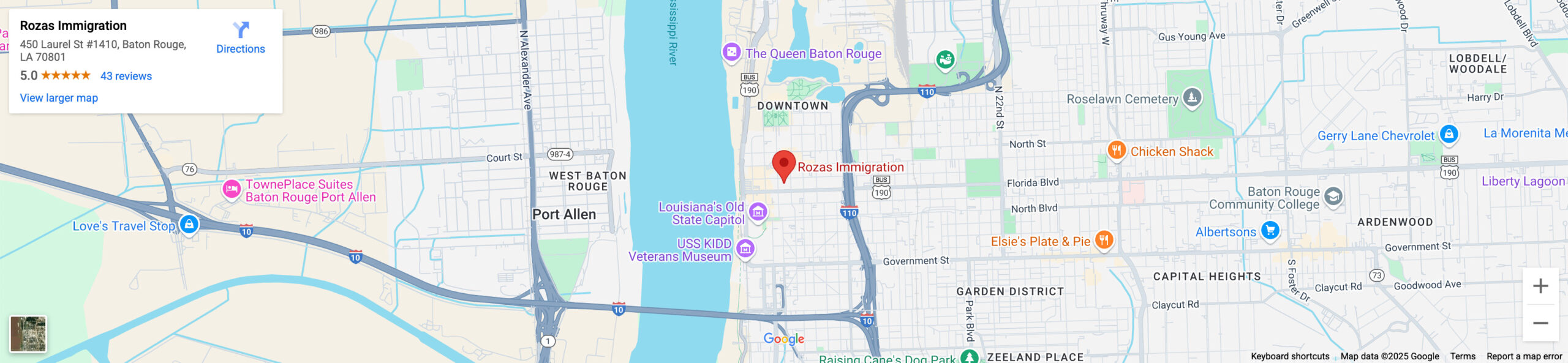
If an old arrest or conviction is holding you back, contact Rozas Law Firm in Baton Rouge at (225) 341-6945 for a confidential consultation, available in English and Spanish. We handle expungements and criminal defense in East Baton Rouge, Ascension, Livingston, and West Baton Rouge parishes, and we can tell you quickly whether you qualify and what it will take.
This article is for general information only and is not legal advice. Every case is different.

Written by David Joseph Rozas
David Rozas is an experienced criminal and immigration lawyer and one of the founding partners of Rozas & Rozas Law Firm. He has been with the firm since 2004, joining his brother, Greg in practice. David concentrates his law practice on criminal defense and immigration.