.svg)
First-Offense DWI in Baton Rouge: What Happens Next and How to Fight It
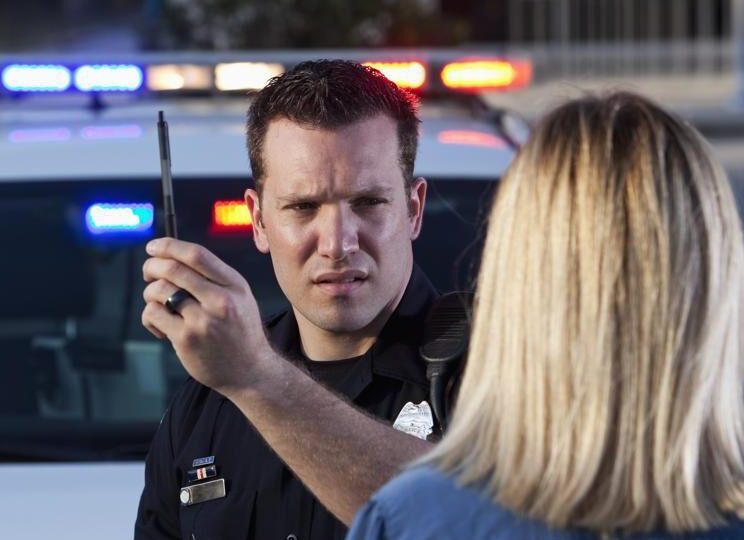
You got pulled over coming down I-10, or maybe leaving the bars near LSU on a Friday night. You blew, or you refused. You spent a night you’d rather forget at East Baton Rouge Parish Prison, and now you’re holding paperwork you don’t fully understand and wondering whether your life just changed. Take a breath. A first-offense DWI in Louisiana is serious, but it is also very defendable, and most first offenders who handle it correctly come out the other side with their future intact.
There are attorneys on our team who have spent more than 35 years defending criminal cases, and our lawyers handle DWI matters across East Baton Rouge Parish, in both Baton Rouge City Court and the 19th JDC on North Boulevard. Here’s the truth we’ve learned: the biggest mistakes happen in the first month after arrest, not in the courtroom. So let’s walk through what you’re actually facing and what needs to happen right now.
Louisiana First Offense DWI Penalties Under La. R.S. 14:98
A first-offense DWI is a misdemeanor under La. R.S. 14:98. The statute calls for a fine of $300 to $1,000 and a jail sentence of ten days to six months. Before you panic about jail, understand how these cases usually resolve for first offenders: courts commonly suspend most or all of that jail time in favor of probation, with conditions like community service, a substance abuse evaluation, and a driver improvement program. That’s the typical shape of things, though every case is different and judges have discretion.
The legal limits matter too. For drivers 21 and over, the threshold is a blood alcohol concentration of 0.08. If you’re under 21, it drops to 0.02, which is essentially one drink. Commercial drivers are held to 0.05, and for someone who drives for a living, a DWI can be a career problem far beyond the criminal penalties. And Louisiana law doesn’t stop at alcohol. Following legislation passed in 2026, the statutes now use “impaired” terminology that squarely covers drugs, prescription medication, and combinations of substances. You can be over nothing and still be charged if the officer believes your ability to operate a vehicle was impaired.
One more change worth knowing from that same 2026 legislation: misdemeanor DWI cases are now tried to a judge alone. There is no jury trial for a misdemeanor DWI in Louisiana anymore, only a bench trial. That shifts strategy. Your lawyer isn’t building a case for six jurors; the audience is one judge who has heard hundreds of these cases and knows exactly how field sobriety tests and breath machines actually perform.
The 30-Day License Deadline Most People Miss
Here is the single most urgent thing in this article. Your criminal case and your driver’s license are handled in two completely separate proceedings. The Office of Motor Vehicles runs an administrative process that has nothing to do with what happens in court, and you have only 30 days from the date of your arrest to request an administrative hearing to challenge the suspension of your license. Miss that deadline and the suspension can take effect regardless of how strong your defense is, even if the criminal charge later gets reduced or dismissed.
For a first offense, the suspension is generally one year, and it stretches to two years if your BAC was 0.15 or higher. If you refused the breath test, you face a separate refusal-based suspension under Louisiana’s implied consent law, and prosecutors can still use the refusal against you in court. Refusing does not make the case go away. It just changes which fights you’re having.
The practical lifeline for most people is the ignition interlock device. Louisiana law commonly requires interlock as a condition of hardship driving or reinstatement, especially in high-BAC and refusal cases. It’s inconvenient and it costs money, but it keeps people driving to work, and in Baton Rouge, where almost nobody survives without a car, that matters. A DWI lawyer in Baton Rouge can request the administrative hearing, fight the suspension, and structure interlock and hardship options so your life keeps functioning while the case plays out.
How DWI Stops Actually Get Challenged
Police need reasonable suspicion to stop you and probable cause to arrest you, and both are attackable. DWI enforcement in EBR Parish concentrates along I-10 and I-12, around the LSU area, and at publicized checkpoints, which have their own legal requirements regarding planning and operation. Was the stop legitimate? Were the field sobriety tests administered the way the manuals require, on level ground, with proper instructions? Was the breath machine maintained and certified, and was the operator qualified? Was there a proper observation period before the test?
These are not technicalities. They are the requirements the State must satisfy, and when the State cuts corners, evidence gets suppressed and cases collapse. We won’t pretend every case has a winning suppression issue. Many don’t. But you will never know whether yours does until someone who handles these cases daily pulls the video, the maintenance records, and the officer’s training file and actually looks.
Article 894, Expungement, and Protecting Your Record
For first offenders whose cases aren’t winnable outright, Louisiana offers a genuinely valuable tool: a plea under Code of Criminal Procedure Article 894. Handled correctly, an 894 plea allows the conviction to be set aside after you successfully complete probation, which opens the door to a future expungement of the arrest and conviction from your record. For a nurse, a teacher, a CDL applicant, or a college student at LSU or Southern with a career ahead of them, that difference is hard to overstate.
An 894 plea is not automatic, it generally can be used only once in a set period, and whether it’s the right move depends on the strength of the evidence against you. Sometimes the smarter play is to fight. That judgment call is precisely what you’re hiring a lawyer to make with you.
One caution about thinking of a first offense as no big deal. Louisiana uses a ten-year cleansing period, meaning a DWI stays countable against you for ten years. Pick up a second offense within that window and the penalties climb sharply, and a third becomes a felony. What you do with this first case, including whether it’s positioned for expungement, follows you for a decade. Handle it like it matters, because it does.
Time is short, and that 30-day administrative clock is already running. If you or someone you love was arrested for DWI in East Baton Rouge, Ascension, Livingston, or West Baton Rouge Parish, contact Rozas Law Firm in Baton Rouge at (225) 341-6945 for a confidential consultation, available in English and Spanish. We handle DWI cases in Baton Rouge City Court and the 19th Judicial District Court, and we’ll tell you straight what your options are.
This article is for general information only and is not legal advice. Every case is different.

Written by David Joseph Rozas
David Rozas is an experienced criminal and immigration lawyer and one of the founding partners of Rozas & Rozas Law Firm. He has been with the firm since 2004, joining his brother, Greg in practice. David concentrates his law practice on criminal defense and immigration.