.svg)
Can I Extend My Visa in the US? A Complete Guide for Visitors and Families
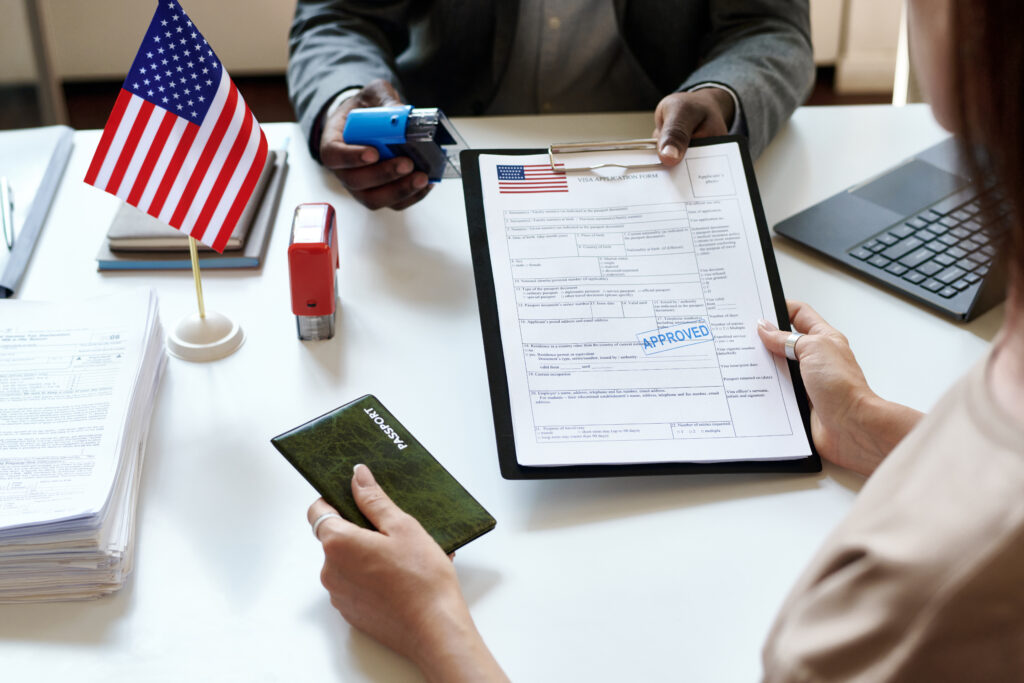
The short answer is yes. But only if you act in time.
Many visitors find themselves in the same position. You came to the U.S. for a few months, and now circumstances have changed. Maybe your recovery is taking longer than expected. Maybe family needs you here. Whatever the reason, the path forward exists. The key is knowing exactly what steps to take and when.
This guide to extend US visas explains who qualifies, how Form I-539 works, what documents USCIS expects, and how to extend visa status for family members traveling with you.
Can I Extend My Visa in the US?
Before anything else, you need to know if you’re eligible. Not every visa category allows for an extension, so this is the first question to answer.
USCIS generally allows an extension if:
- You were lawfully admitted to the U.S. on a valid nonimmigrant visa
- Your current status hasn’t expired yet
- Your passport will remain valid throughout the requested extension period
- You haven’t worked without authorization or violated the terms of your status
- You are not in removal or deportation proceedings
Some visa categories are not eligible for extension at all. If you entered on a K-1 fiancé(e) visa, a Visa Waiver Program (ESTA), or certain other classifications, you cannot file to extend your stay. K-1 holders in particular should speak with an immigration attorney right away about their options. Our K-1 fiancé visa attorneys can walk you through what comes next.
If you’re unsure about your visa category, check your Form I-94 at i94.cbp.dhs.gov. That record tells you when your authorized stay actually ends, not when your visa stamp expires. These two dates are often different, and confusing them is one of the most common mistakes visitors make.
What Are Valid Reasons for Extending a Visitor Visa in the USA?
USCIS doesn’t approve extensions simply because you’d like more time. You need a legitimate reason, and the stronger your documentation, the better your chances.
Here are the four main categories USCIS accepts for B-2 visitor visa extensions:
- Medical treatment. You’re receiving ongoing care from a U.S. doctor or specialist, and treatment hasn’t concluded. A letter from your physician explaining the treatment plan and expected timeline is essential here.
- Family emergency. An immediate family member in the U.S. experienced a sudden serious illness, injury, or death. The emergency should have occurred after your original entry. Hospital records, doctor’s notes, or other documentation should support your request.
- Natural disasters or unsafe conditions in your home country. If conditions back home (a natural disaster, civil unrest, or other serious instability) make it unsafe or impossible to return, USCIS may accept this as a valid reason. State Department advisories and credible news coverage can help support your case.
- Continued tourism or family visits. Visiting family, attending events, or continuing tourism activities can also qualify, provided you can show you have the financial means to support yourself and strong ties to your home country that you fully intend to return to.
One thing USCIS always wants to see: clear evidence that you plan to leave when your extension ends. Any suggestion of permanent intent (such as filing for a green card simultaneously or working without authorization) will likely result in denial.
Guide to Extend US Visas With Form I-539
The primary form used to extend a nonimmigrant stay is Form I-539, Application to Extend/Change Nonimmigrant Status. Here’s how the process works.
Step 1: Check your I-94 expiration date. Your authorized stay ends on the date listed on your I-94 record, not on your visa stamp. Go to i94.cbp.dhs.gov and download your record before you do anything else.
Step 2: File early. USCIS recommends submitting your Form I-539 at least 45 days before your I-94 expires. As of 2026, processing times range from 6 to 14 months for most nonimmigrant categories, so filing early matters more than ever.
Step 3: Prepare your documents. Your application should include:
- Completed and signed Form I-539
- Copy of your passport biographic page and visa or entry stamp
- Your Form I-94 record
- Evidence supporting your reason for the extension (physician letters, financial statements, documentation of home country ties)
- Proof that you can financially support yourself during the extended stay
Step 4: Pay the filing fee. The current fee is $420 if you file online through your myUSCIS account, or $470 if you file by mail. USCIS eliminated the separate biometrics fee for I-539 applicants in 2023, so no additional biometrics payment is required at filing. Always confirm the current fee at uscis.gov before submitting, as fees are subject to change.
Step 5: Await a decision. Once filed, you’ll receive a receipt notice (Form I-797C) with a case number. Keep it. It confirms your application is in process. While your application is pending, you are allowed to remain in the U.S. lawfully. You cannot travel internationally during this time. Leaving the country while your I-539 is pending is treated as abandonment of the application.
If USCIS approves your extension, you’ll receive a new I-94 with an updated departure date. Extensions are typically granted in increments of up to six months. Keep in mind that with current processing times running 6 to 14 months, your status may still be pending well after your original I-94 date. As long as you filed on time, that is normal and lawful.
How to Extend Your Visa for Family Members
If your spouse or children are with you in the U.S. and hold the same or a derivative nonimmigrant status, you can generally include them in your I-539 application using Form I-539A (Supplement A). Filing together simplifies the process and keeps the family’s status aligned.
For families navigating more complex situations (a U.S. citizen spouse, a pending green card, or family preference categories) the path forward involves more moving parts. Our marriage and family visa attorneys handle exactly these situations every day. We also work extensively with family preference visa cases, which involve specific timelines and eligibility requirements that an attorney can help you manage.
Learn more about all the immigration legal services we offer, including our full range of visa representation.
What Happens If You Miss the Deadline?
This is where things get serious.
If you overstay your authorized period without filing a timely extension, you begin accruing unlawful presence. Overstaying 180 days results in a 3-year bar from re-entering the U.S. Overstaying one year or more triggers a 10-year bar. In some cases, your visa may be automatically voided, without any notice or stamp in your passport.
A pending I-539 protects you only if you filed before your I-94 expired. Filing late does not retroactively protect you from unlawful presence.
If your status has already lapsed, speak with an immigration attorney before taking any action. There are limited exceptions for extraordinary circumstances (severe illness, natural disasters, certain government-related delays) but these are evaluated case by case.
Common Reasons USCIS Denies Visa Extensions
USCIS may deny a visa extension request for several reasons, especially if the applicant failed to maintain lawful status or did not provide enough supporting evidence. Common reasons include:
- Filing after the I-94 expiration date. Late filings are heavily scrutinized and may result in denial unless extraordinary circumstances apply.
- Working without authorization. Unauthorized employment can violate the terms of a visitor or nonimmigrant visa.
- Incomplete supporting documents. Missing financial records, medical documentation, or proof of home-country ties can weaken the application.
- Concerns about permanent immigration intent. USCIS may deny the request if it believes the applicant plans to remain permanently in the United States instead of returning home.
- Insufficient financial support. Applicants must show they can support themselves during the extended stay without unauthorized work.
- Violating visa conditions. Overstaying, attending school without authorization, or otherwise failing to maintain valid nonimmigrant status can lead to denial.
Don’t Wait Until It’s Too Late – Call Rozas Immigration Today!
The 45-day window goes faster than most people expect. Processing delays, missing documents, and last-minute paperwork all create risk when you’re cutting it close.
At Rozas Law Firm, we’ve helped more than 11,000 clients navigate the U.S. immigration system since 2004. Our attorneys represent clients nationwide in English and Spanish.
If you need to extend your stay, or if you’re not sure whether you qualify, we’re here to help you figure out the next step.
Call us at 225-341-6945 or schedule a consultation online.