.svg)
Immigration Habeas Corpus in the Fifth Circuit: What Families in Louisiana, Mississippi and Texas Need to Know

If someone you love has been picked up by ICE and taken to Jena, Winnfield, Basile, Natchez or one of the detention centers in South Texas, you have probably already heard the words “no bond.” You may have been told there is nothing to be done until the immigration judge rules, and that the wait could be a year or longer.
That is not the whole picture. There is a separate door, and it is not in immigration court. It is a petition for a writ of habeas corpus filed in federal district court under 28 U.S.C. § 2241. Our firm files these petitions in the Western and Middle Districts of Louisiana, and the same framework governs cases arising out of Mississippi and Texas, because all three states sit inside the United States Court of Appeals for the Fifth Circuit.
Here is what families and referring attorneys in this circuit need to understand right now.
A habeas petition challenges the detention, not the deportation
This is the single point that causes the most confusion, so it is worth being blunt about it.
A habeas petition under § 2241 asks a federal judge one question: is the government holding this person lawfully? It does not ask the judge to cancel a removal order, grant asylum or reopen a case. Congress moved those questions out of the district courts years ago. Challenges to an actual order of removal go to the court of appeals through a petition for review under 8 U.S.C. § 1252(a)(5) and § 1252(b)(9).
What remains in district court, and what remains powerful, is the detention itself. How long has this person been held. Was there ever an individualized determination that he is dangerous or a flight risk. Is the confinement still serving any lawful purpose, or has it simply become punishment while the immigration docket crawls forward.
A federal judge can order a bond hearing. A federal judge can order release. In the right case, that order comes in weeks rather than the year or more an immigration appeal takes.
Why the Fifth Circuit is its own world
Immigration detention law is not uniform across the country. What works in the Second Circuit does not necessarily work in Alexandria or Natchez, and 2026 has been a punishing year for detained clients in this circuit.
In February 2026, in Buenrostro Mendez v. Bondi, the Fifth Circuit held that people who entered the country without inspection are detained under 8 U.S.C. § 1225(b)(2)(A) rather than § 1226(a). The practical effect is severe. Detention under § 1225 carries no immigration judge bond hearing at all. Years of district court practice allowing those bond hearings was wiped out in a single opinion, and thousands of people in Louisiana, Mississippi and Texas went from bond eligible to held without any hearing.
Then came a real, if temporary, opening. On July 2, 2026, a Fifth Circuit panel decided Sosnava Rodriguez v. Ortega and affirmed grants of habeas relief for people with long residence and deep community ties who were being held under § 1225(b)(2)(A). Applying the Mathews v. Eldridge balancing test, the panel required a bond hearing within roughly 90 days of detention, at which the government would have to articulate an individualized reason to keep holding the person.
That opinion did not survive the month. On July 10, 2026 the full court granted rehearing en banc, which automatically vacated the panel decision. On July 21, 2026 the court stayed the underlying district court judgments while the en banc rehearing proceeds. Briefing is expected to close in the fall, with argument and a new decision to follow.
Meanwhile, the Supreme Court has taken up the neighboring question. In Genalo v. Black, No. 25-886, cert was granted on June 15, 2026 and argument is set for October 13, 2026. The Court will decide whether prolonged detention under 8 U.S.C. § 1226(c) requires a bond hearing, and if so whether the government must justify continued detention by clear and convincing evidence. Whatever the Court says will land directly on top of the Fifth Circuit’s en banc work.
⚠️ Case citations, docket numbers and dates in this post reflect our research as of late August 2026. This area is moving weekly. Verify current status before relying on any of it in a filing or in advising a client.
Where the petition has to be filed
Venue in habeas is not a matter of convenience, and getting it wrong costs weeks that detained clients do not have.
The petition goes in the federal district where the person is physically confined, and it names the warden of the facility as respondent. Naming the Attorney General, the Secretary of Homeland Security or the ICE Field Office Director instead of the warden is one of the most common reasons these petitions get dismissed before anyone reaches the merits.
In practice, that means knowing the map:
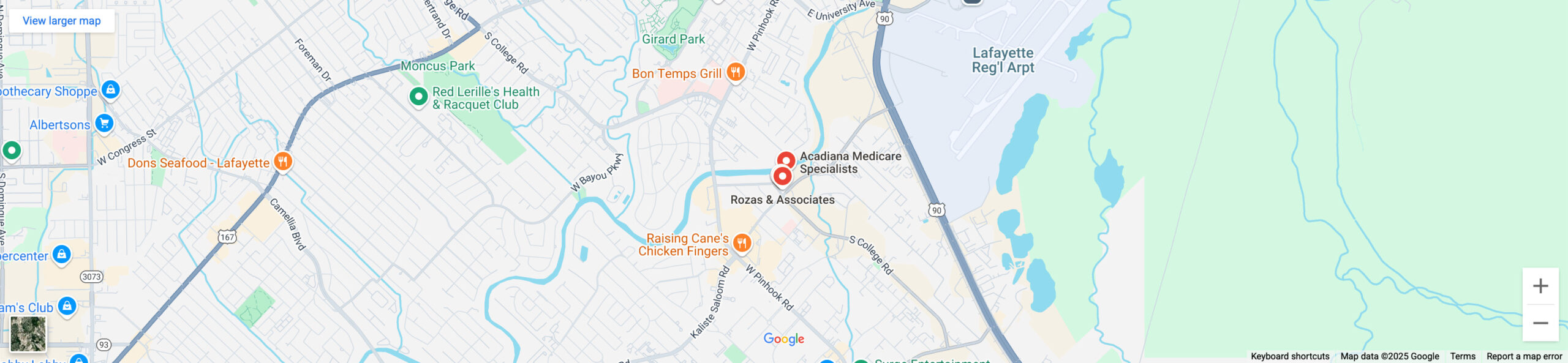
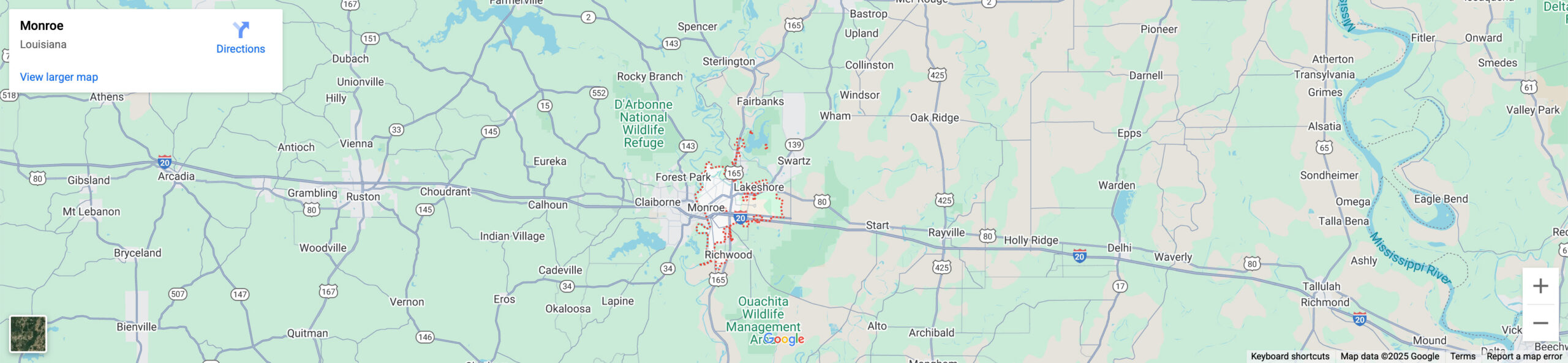
Louisiana. The Central Louisiana ICE Processing Center in Jena and Winn Correctional Center in Winnfield both fall in the Alexandria Division of the Western District. Richwood in Ouachita Parish goes to Monroe. The Basile and Pine Prairie facilities in Evangeline Parish go to Lafayette. Winn is the one that catches people out, because Winnfield looks closer to Monroe on a map but the parish is allotted to Alexandria.
Mississippi. Adams County Correctional Center in Natchez is one of the largest ICE facilities in the country, and habeas petitions from it land in the Southern District of Mississippi.
Texas. The detention network is spread across the Western, Southern and Northern Districts, with heavy concentrations around El Paso, Pearsall, Port Isabel and the Rio Grande Valley. El Paso and the West Texas courts have seen an extraordinary volume of filings.
One more thing about geography: ICE transfers people. A client can be filed on in one district on Monday and be in another state by Friday. That is not an accident of logistics, and it is one of the reasons speed matters.
The claims that still have traction
Even with Buenrostro Mendez on the books and Sosnava Rodriguez vacated, these petitions are not dead. What has changed is that the strongest arguments are now constitutional rather than statutory. In the cases we are handling and the ones being litigated across the circuit, the theories that continue to draw relief include:
Procedural due process for people with long residence, families and community ties who have never received any individualized hearing.
Procedural due process for people who had previously been released on bond, parole or recognizance and were then re detained without process.
Substantive due process where the detention no longer serves any lawful purpose, most often when removal is not reasonably foreseeable.
Fourth Amendment challenges arising from the circumstances of the arrest itself.
Violations of the government’s own regulations, including the parole revocation procedures at 8 C.F.R. § 1236.1(c)(9).
Cases involving a pending immigration benefit, such as a U visa petition, a filed I-130, DACA or SIJS, where continued detention is especially hard for the government to justify.
The backlog is part of the problem
Volume is now its own obstacle. Federal courts nationwide have received tens of thousands of immigration habeas petitions in the past year, and some districts are handling them far better than others. Reporting out of Mississippi this summer found that hundreds of petitions had been filed in the Southern District with a very small fraction resolved on the merits, while other districts around the country were deciding a quarter to a half of theirs.
The lesson is not that filing is futile. The lesson is that how a petition is drafted, where it is filed, whether the correct respondent is named and how aggressively it is pushed after filing all determine whether it gets decided at all.
What families should do in the first days
Write down the person’s full name and A number, the facility, and the date of detention. Do not wait for a bond hearing that may never be scheduled. Gather the proof of long residence, work history, family ties and any pending immigration filing, because that evidence is the heart of the due process argument. And get the file in front of counsel who actually practices in the district where the person is being held, before a transfer moves the case somewhere else.
Talk to our office
Rozas Law handles federal habeas litigation for detained clients in Louisiana and takes matters arising throughout the Fifth Circuit. We work these cases alongside the underlying immigration proceeding, and we regularly work with attorneys in other states who need counsel admitted in the Louisiana federal districts.
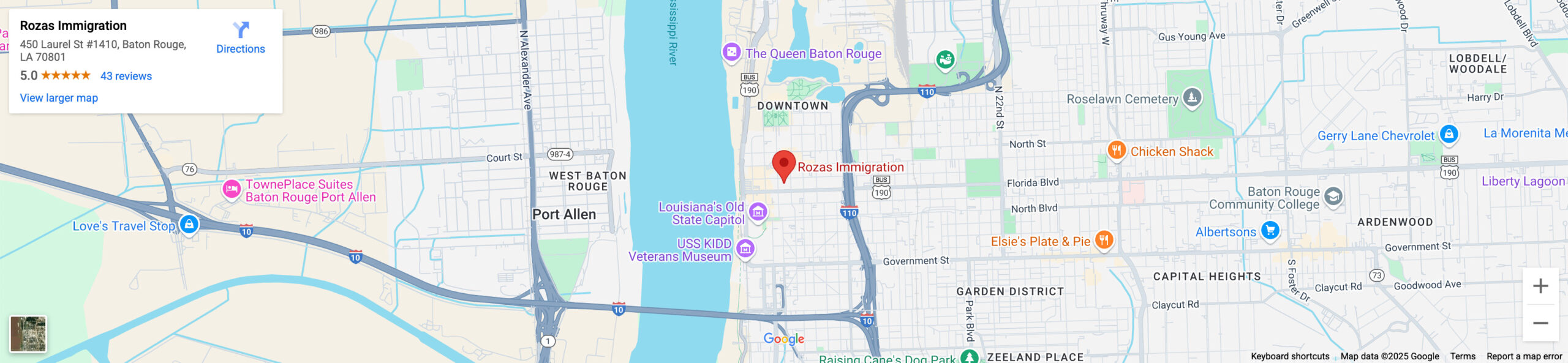
If someone in your family is being held, or if you are an attorney with a client at Jena, Winn, Basile, Richwood, Natchez or a Texas facility, call our Baton Rouge team of immigration habeas corpus lawyers. Detention cases move on a clock, and the earlier we see the file, the more we can do with it.
This post is general information about the law and is not legal advice. Reading it does not create an attorney client relationship. Every case turns on its own facts.